The knock didn’t come from a stranger.
It came from someone they knew.
A teacher. A social worker. A familiar face standing on a front step, holding a week’s worth of food. It is not just groceries, but assurance that someone, somewhere, is still paying attention.
For six weeks this winter, across Woodbury and the broader South Washington County area, that was the system for food shelves.
It had to be.
A system built in motion
Operation Metro Surge, a federal immigration enforcement effort that intensified across the Twin Cities late 2025 into 2026, collided with an already fragile moment. Months earlier, SNAP benefit disruptions had forced thousands of Minnesotans to further stretch already thin budgets.
Along with came fear.
Immigrants, regardless of documentation status, stopped leaving their homes because they were afraid ICE would detain them. And the traditional food shelf model, built on hungry people coming to a mode of generosity, had to pivot.
Dr. Cheryl Jogger, founder of SoWashCo Cares and community engagement coordinator for South Washington County Schools, described how quickly the pivot happened.
“Our school staff identified families who had reached out and indicated that they need help getting food,” Jogger said. “And so the staff let SoWashCo Cares know, and then we reach out to our community partners, including Basic Needs and Open Cupboard, and we let them know how many families we need food for.”
The solution: bring the food to them.
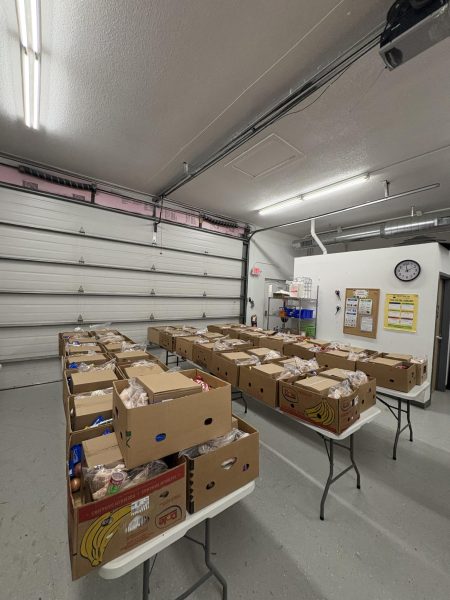
Volunteers were sent to pack food at local shelves. The food was transported to schools. And from there, it reached homes, often in the truck beds of personal vehicles.
“They bring the needed items to the schools, and the schools get it to the families in need,” Jogger said. “That’s been our model since we started, and that’s how we did the Food Assistance Program.”
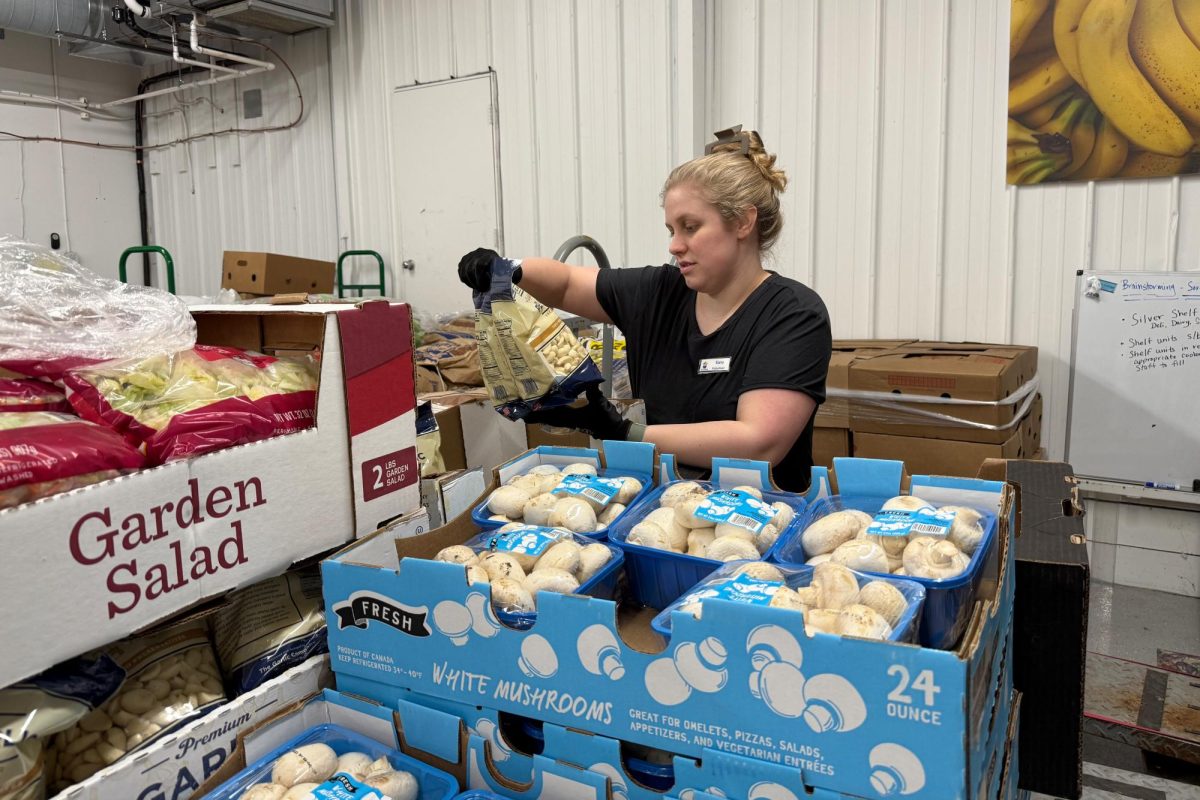
About 75 families received food each week for roughly six weeks, according to Jogger. Each delivery included what she described as a “huge bounty of food,” not just canned goods, but fresh produce, meat, milk and eggs rescued from local grocers. Additional supplies like diapers and cleaning products were purchased using donated gift cards.
At Open Cupboard, the surge pushed operations far beyond normal capacity. Lina Christopher, the organization’s delivery coordinator, said their existing DoorDash partnership, which began in response to the COVID pandemic, allowed them to scale rapidly.
“We were doing 90 families a week,” Christopher said. “With the surge, we started doing 120 a week.”
Over two months, that meant jumping from roughly 360 deliveries to about 550. And that was only part of it.
“In the month of February, we put together an additional 1,600 emergency boxes,” Christopher said.
Those boxes, packed with dry goods, produce, meat and hygiene items, were often picked up in bulk by teachers, social workers and church leaders, who then delivered them directly to families.
At Basic Needs, there was a mounting pressure for both food and people. Executive Director Opey Peñaloga said demand surged by about 30% after SNAP disruptions in late 2025, with the organization typically serving 4,500 households per month before the spike.
“It required more volunteers,” Peñaloga said. “We had to order more food. We doubled our food orders.”
Stories behind the deliveries
If the first phase was logistics, the second was human.
The phone calls told the real story.
Christopher remembers one in particular.
“I just came back from being detained for a month,” a caller told her. “My child was taken by social services. I have no food.”
The woman had an ankle monitor. She had been detained after leaving her home to find food.
“That was really hard to listen to,” Christopher said.
There were others.
Families who hadn’t left their homes in weeks. A mother whose husband, the family’s primary earner, had been taken. Parents whispering through calls while their children played in the background.
“I haven’t left my house for a month,” another caller said.
At Open Cupboard, staff processed dozens of these requests daily, often without the ability to fully verify or document each case. They didn’t try to.
Trust became the policy.
“If you need a food delivery and you’re having a difficult time getting to the food shelf, we will serve you,” Christopher said.
Meanwhile, teachers were taking time outside of their classroom to deliver food to their own students.
“We made sure it was to people that they knew,” Jogger said on behalf of the Basic Needs delivery operation. “We didn’t want to send random people to people’s homes.”
At Open Cupboard, Executive Director Jessica Francis saw the emotional toll up close.
“The market’s just quiet,” she said, describing the food shelf’s atmosphere during the surge. “People would come in quietly, wait and get out of there as soon as they could.”
Some families were legally in the country but still afraid to leave their homes. Others had seen relatives detained and didn’t know if they would return.
“We never asked any questions,” Francis said. “If somebody told us that they are afraid to leave their homes, we found ways to get them food.”
At Basic Needs, one volunteer was detained by ICE just outside the entrance. He was held for a week before being released.
“He showed his paperwork and his identification, and that wasn’t enough,” Peñaloga said.
The volunteer, who served as a door greeter and translator for non-English-speaking individuals, has not returned since.
What it revealed (and what comes next)
Across the organizations, the numbers revealed the full scale of what had happened.
At Basic Needs, nearly 6,500 pounds of culturally specific food, including halal meats and other specialty items, were delivered directly to families impacted by ICE activity and to seniors affected by the SNAP disruption and potential Medicaid loss.
In January and February alone, the organization distributed 186,480 pounds of food through its market operations. When combined with its expanded delivery programs, the total reached 192,980 pounds.
During the same period in 2025, Basic Needs distributed 101,966 pounds.
Peñaloga estimated that 15% to 20% of monetary donations during the early months of 2026 came from new donors, many from outside Minnesota.
“We’ve had checks that have come from Washington, the West Coast, New York City,” he said.
At Open Cupboard, the scale was equally striking. The organization served 7,800 families in a single week during the surge and rescued about 2.4 million pounds of food over the last year.
But the success came with strain.
“The last six months have felt like three years,” Jogger said. “It’s almost hard to even remember back to when it was just the SNAP cuts that were happening, because we thought that was bad, and then it just went from bad to way worse.”
The same has gone for Basic Needs.
“There’s a lot of burnout,” Peñaloga said. “People are tired.”
Still, their work continues.